Owning a dog or cat in the Wattle Range Council Area
Pet ownership can be a wonderful source of companionship and pleasure, but it also comes with a great deal of responsibility.
As a pet owner you must:
Register your dog or cat
In South Australia, it’s compulsory for all dogs and cats to be registered on Dogs and Cats Online (DACO), the statewide database for all dogs, cats and breeder registration. All dogs and cats must be registered by 3 months of age, or within two weeks of ownership. This is done using the animal’s microchip number, which will be provided by your vet, microchip implanter, shelter or breeder.
Dog and Cat registrations expire on 30 June each year. Each July, you’ll receive a reminder notice to renew your pet registration and to log in and ensure your details are up to date and correct.
If you have not registered your dog or cat by 31st of August this is considered an offence and a late fee will apply, you may also receive an expiation.
It is your responsibility to keep your details up to date through Dogs and Cats Online. If your pet passes away or is lost for more than 72 hours, you must update your pet's record on DACO. If your cat or dog is surrendered or rehomed to a new owner, their registration must be transferred to the new owner on DACO. If you require assistance with the registration process or require assistance to register your pet or update your details, please contact us on 8733 0900.
Read the Wattle Range Council Dog and Cat Management Plan 2024 - 2029
Register your cat or dog today through Dogs and Cats Online (DACO)
View our dog and cat registration FAQ
Microchip your dog or cat
In SA, microchipping is compulsory and enforced by law. All cats and dogs born after 1 July 2018 must be microchipped by 12 weeks of age or within 28 days of ownership. Your pet should ideally be microchipped before you purchase or adopt it. If not, your vet will be able to safely microchip your pet.
Read more about microchipping on the Dog and Cat Board website
Desex your dog or cat
All cats and dogs must be desexed by the age of six months, or within 28 days of ownership. Exemptions may apply with written documentation from a vet.
Read more about desexing on the Dog and Cat Board website
Comply with breeding, selling and buying laws
There are laws that regulate breeding and selling dogs and cats in South Australia:
- Breeders and sellers must adhere to the South Australian Standards and Guidelines for Breeding and Trading Companion Animals
- Breeders intending to sell dogs and cats that they’ve bred must register them on Dogs and Cats Online
- A dog or cat can’t be sold without a microchip
- The dog or cat must be desexed by six months of age
- Any advertisement selling a dog or cat must include the seller's and breeder's contact details as well as the breeder registration number
- Sellers and breeders must provide specific information to purchasers, such as the seller's and breeder's details, the breeder's Dogs and Cats Online number, vaccination details, desexing details, microchip details and any known illnesses or medical conditions.
Your extra responsibilities as a dog owner
Keep your dog secure
Assess your property regularly to make sure that it can safely contain your dog.
See dog parks and off-leash areas
Manage your dog’s barking
All dogs bark, but continuous barking can greatly interfere with your neighbours' peace and comfort.
See what can Council do about nuisance barking?
Pick up your dog poo
When you’re with your dog in a public place, you must clean up after them. This can easily be done using a scooper and a compostable bag to remove and dispose of the poo.
Dog and Cat registration Frequently Asked Questions
All dogs and cats are registered through Dogs and Cats Online (DACO). You’ll need the following:
- An email address
- Any concession cards
- Certificate of microchipping/desexing
Register your cat or dog today through Dogs and Cats Online (DACO)
You must register your pet when they’re three months of age, or within 14 days of ownership.
You’ll need to pay your registration by 31 August each year.
The annual registrations are sent out each year in July and are sent via the method you have nominated (email, SMS or post).
Please contact Council if you have any queries or didn't receive a renewal notice.
Council has a Dogs By-Law which limits the number of dogs that can be kept at premises. For a premise in a township, the By-Law allows a maximum of three dogs. The maximum number of dogs that can be kept at a premise outside of a township is three dogs, with the exception of working dogs.
Should you wish to keep more than the prescribed number of dogs, an application to Council must be made:
More than the prescribed number of dogs application form (PDF, 226 KB)
Read the Wattle Range Council Dogs By-Law 2019 (PDF, 158 KB)
All Council fees and charges are set annually and approved by Council.
See the fees and charges (PDF 87.2 KB)
Lost dogs
You have the best chance of being reunited with your lost dog if your pet is registered with Dogs and Cats online and is microchipped. A collar disc with a current telephone number and/or address is also advisable.
If your dog becomes lost, Council advises that you:
- Ring Council on (08) 8733 0900 to notify us that the dog is lost and to see if we have already collected your pet.
- Contact local vets to see if your pet may have been taken there.
- Do a letterbox drop in your local area.
- Use social media.
If you find a lost dog, phone the Council office on (08) 8733 0900 and ask to speak to a General Inspector, who will come and collect the dog.
If calling after hours, the call will be transferred to Council’s After Hours Call Centre and will be directed onto the on-call General Inspector.
The After Hours Call Centre is available 24 hours a day, 7 days a week by calling (08) 8733 0900. Every endeavour will be made to reunite the dog with its owner.
Most of the time the Council is able to quickly reunite lost dogs with their owners. Council will hold an animal at its kennel facility for a period whilst it attempts to find the animal's owner.
If Council is unable to establish the identity of a dog owner, or is unable to make contact with the owner, the Council may pursue re-homing the dog.
Payment of impounding fees is required before the dog can be collected from the Council's kennel. If the dog is unregistered, the dog will also need to be registered before Council can release the dog.
Expiation notices may be issued for dogs found wandering without an owner and/or unregistered dogs.
Nuisance Cats, barking dogs and dog attacks
Dealing with dog attacks and excessive dog barking from a neighbor’s pet can be incredibly frustrating and at times scary. Problems occur for owners, neighbours, the community and the dog when these situations become extreme.
Barking is a natural behaviour for dogs and they are permitted to bark unless the barking is considered excessive.
If you are concerned about the level of noise a dog in your area is making, try to resolve the issue by speaking to the owner first. Many times dog owners are unaware their pet is causing a problem to their neighbours and are happy to put measures in place to reduce the barking when alerted to the issue and work with their neighbours.
If you approach them in a friendly manner you may be able to reach a solution quickly.
Conversely, there may be contributing factors that your neighbour may require your support in resolving, such as cats entering the property, provocation by others, startling loud noises, etc.
If the matter cannot be resolved directly with the dog's owner, you can make a formal complaint to Council who can investigate the matter with supporting evidence provided by you, the complainant.
Find more information about managing barking dogs on the Dog and Cat Management Board website
Wattle Range Council has a procedure to respond to barking complaints.
In most instances when an official complaint has been received, the complainant will be asked to complete a barking dog diary. Council will assess the evidence of nuisance, and if applicable, approach the owner of the dog to assist in resolving the barking dog issue.
If the dog continues to create a noise which persistently occurs or it unreasonably interferes with the peace, comfort or convenience of a person, the owner may be fined or have a Control (Barking Dog) Order placed on the dog, legally requiring them to take all reasonable steps to reduce the noise.
For more information, please contact Council’s General Inspectors on (08) 8733 0900.
It is an offence under the Dog and Cat Management Act 1995 for a dog to attack or harass a person or animal.
Harassment is defined as a dog troubling or annoying a person without being the primary cause of physical injury i.e. the dog may chase a person or animal but not bite them. Attack is defined as a dog acting with force or harmfully resulting in physical injury such as bruising, puncture wounds or laceration.
If you or your dog is attacked by another dog, once you are safe, try to get as many details as you can about the dog. Note the colour, size, breed, markings and collar colour of the dog and take a photo if safe. If possible, note the registration disc number and council registered at, the owner’s details and any witnesses. Council will also require the date, time and location of the harassment or attack. It is important to report the attack to Council as soon as possible.
In the case of a serious attack where you or your dog has been injured you should also call the police who are authorised under the Dog and Cat Management Act 1995 and can provide immediate assistance in an emergency. It is important that medical or veterinary assistance is sought as soon as possible*.
Councils can investigate dog harassment and attacks and impose penalties and controls on the dog owner as appropriate. The more information you can provide the Council, the more likely it is that they will be able to identify the owner and the dog that harassed or attacked you. Council may request copies of any medical assistance required as a result of the attack. In some instances, Council Officers may ask to take photographic evidence.
Claims for damages are addressed as a civil matter. Councils are unable to facilitate any compensation to the victims.
Under the Dog and Cat Management Act 1995, as the owner of, or person responsible for the dog you are liable if your dog harasses, attacks or chases a person or an animal or bird owned or in the charge of another person. There are exceptions to the offence.
If you are present at the incident, restrain your dog if safe to do so. You have a duty of care of others, so check their welfare and support them to access the services they require.
Councils have set procedures for the investigation of dog harassment and attack reports. It is important you cooperate with the council’s investigation.
You may wish to consider informing the source of the dog of the incident as this information may result in different selection of breeding dogs, temperament testing alterations and much more.
Council may place a control order (nuisance, menacing or dangerous) on the dog to reduce the risk of repeat chase, harassment or attack, making it a safer dog for the community with your active participation.
Control order requirements may include, but not limited to desexing, securely enclosed on property, wearing a specific collar, wearing a muzzle in public, remaining under physical restraint in public, warning signs on the property and completion of specified training.
In the incident of a serious attack, Council may consider placing a destruction order on the dog.
Council may also issue expiation's applicable under the Dog and Cat Management Act 1995.
If the dog is already subject to a control order, Council may consider escalating the control order or prosecution through the Magistrates Court.
Speak with your neighbours and establish ownership of the cat. If you cannot find the owner, Council may be able to assist, this includes offering trap hire to capture the cat and check for microchips.
If you are experiencing issues in relation to nuisance stray cats, please do not hesitate to contact Council's General Inspectors on 8733 0900 to discuss your issues.
Find more information about keeping cats on the Dog and Cat Management Board website
Dog parks and off leash areas
Keeping your dog on a leash can help prevent a lot of trouble for you, your dog, and others. Even the friendliest dogs might bite if they feel scared, anxious, or threatened.
When your dog is on a leash, you have a better chance of controlling it and avoiding what could become a distressing or tragic situation.
Council has a number of off leash dog areas:
Enclosed Areas
- Millicent Visitor Information Centre- 9 Mount Gambier Road, Millicent. Fenced area
- McLaughlin Park, Millicent. Enclosed grassed area west of the Millicent United Soccer clubrooms.
Open Areas
- Belt Road Walking Track, Millicent - Open Area Northern end only, from Park Terrace to Saleyards Road
- Bolton Sporting Area - Open Area Southern end, south of the drain
- McCorquindale Park, Penola - Open Area North of main Football oval
- Greenrise Recreation Area, Penola - Open area Eastern side between public toilets and cemetery entrance.
While off leash, your dog must be under the effective control of a competent person. Please ensure your dog is under voice control, within sight and near you at all times. Please be courteous of others sharing the off lead space with you. Call your dog away from other dogs or people, unless they are obviously seeking interaction. If you can't call your dog away from another person or dog, please don't let if off the lead.
Dogs are prohibited from being on sporting playing surfaces. They may be exercised on-leash on the areas immediately surrounding playing fields.
During peak holiday periods there are a number of town beaches and pools where dogs are prohibited, further information can be found in the Council Dog and Cat Manager Plan.
Dogs must be under the effective control of a competent person by means of an adequate chain, cord or leash (2 metres or less) within 5 metres of any playground.
Read the Wattle Range Council Dog and Cat Management Plan 2024 - 2029
The Wattle Range Council support a wide variety of animal management services as listed below
If you are experiencing issues in relation to nuisance cats, please do not hesitate to contact Council's General Inspectors on 8733 0900 to discuss your issues.
It is your responsibility to keep your details up to date through Dogs and Cats Online. If you require assistance with the registration process or require assistance to register your pet or update your details, please contact us on 8733 0900.
Read the Wattle Range Council Dog and Cat Management Plan 2024 - 2029
Register your cat or dog today through Dogs and Cats Online (DACO)
Find more information about keeping cats on the Dog and Cat Management Board website
The Wattle Range Council is populated by several species of bees including native bees and the European Honeybee. Bees play a vital part in the pollinating of our farming crops, fruit trees and vegetables, as well as our native plants and gardens.
Bee Keeping
Residents within Wattle Range Council are permitted to keep bees on their property as long as they do not become a nuisance or hazard to other persons. The council may order a person to remove bees kept on their property in order to abate a nuisance or a hazard to health or safety, under the Local Government Act 1999. It is important to consider neighbour’s within close proximity before keeping bee hives.
Managed bees are considered livestock and as such all persons keeping bees are by law required to register as a beekeeper and comply with the SA Apiary code of conduct – fines for noncompliance apply.
Registration as an Apiarist/Bee Keeper
Person(s) keeping bee hives are requested to have a Certificate of Registration from the Department of Primary Industries and Resources SA (PIRSA) as a registered Apiarist. For more information on the keeping of bees visit:
http://pir.sa.gov.au/biosecurity/animal_health/bees
Bees on Council Land
To report bees on Council land, contact Council (08) 8733 0900 (Business and After hours) to advise of the location and size of swarm or nest.
Bees on Private Property
Council does not handle swarming bees on private property. For assistance in the removal of unwanted bees, land owners are advised to look under ‘Beekeepers’, ‘Bee and Wasp Removals’ or ‘Pest Control’ in the Yellow Pages.
Wasps
The European wasp is native to Europe, North Africa and temperate Asia but not Australia. As the European Wasp is an introduced species, it does not have any na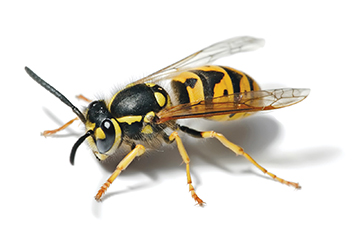 tural predators to keep its numbers in check and are subsequently considered to be a pest.
The European Wasp, is most easily identifiable by:
- its black and yellow body;
- its yellow legs; and
- triangular markings on the abdomen.
European Wasps on Council Land
To report European Wasps on Council land, contact Council's Environmental Health Officer on (08) 8733 0900 to advise of the location and size of swarm or nest. Do not approach European Wasp nests when located.
European Wasps on Private Property
Council does not handle European Wasps on private property. For assistance in the removal of European Wasps, land owners are advised to look under ‘Wasp Removals’ or ‘Pest Control’ in the Yellow Pages. Do not approach European Wasp nest when located.
 (565 kb)
Snakes and lizards are a highly valued part of a healthy native ecosystems. All native snakes are protected species in South Australia. The Wattle Range Council is home to a number of species of snakes. While some snake species are highly venomous, they are unlikely to attack you. However, never try and approach a snake for a closer look.
While there is no sure way of completely preventing snakes from moving on to your property, there are things that you can do:
Keep your yards clean, snakes don’t like to be in the open and will seek refuge.
Remove litter, piles of wood, tin and tiles near your house and keep grass/vegetation short
Keep bird cages free of spilled seed which will attract mice. Ensure there are no gaps in or under your fences.
When you are in your garden wear appropriate shoes when working in your garden.
Further information in relation to Snakes can be obtained via the Department of Environment, Water and Natural Resources (DEWNR) or by clicking here.
If you find a Snake
Council officers are not trained to handle or remove snakes. If a snake is found, you are advised to contact David Miles on 0409 280 837 or look under ‘Snake Catchers’ in the Yellow Pages.
The Wattle Range Council is home to a large and diverse range of native animals.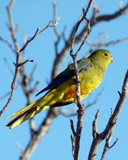
For further information on species found within the region and current projects, visit:
For further information on:
The keeping of native animals
Who to contact
Permits
General Information
Emergency injured animal contacts including birds
Visit http://www.environment.sa.gov.au/
Injured Native Animals
If injured native animals are found contact the Council on (08) 8733 0900, the Police or the Native Animal Rescue in Mount Gambier on (08) 8723 2276.
Council regularly receives information about straying livestock on roadways within the Council area.
Council has the power pursuant to the Impounding Act, 1920 to seize and impound stock that may be found wandering or straying onto property or an adjacent road.
Please contact Council's General Inspectors on 8733 0900 if you have lost livestock or wish to report straying stock within the Council area.